
I put five Copilot Cowork models through the same executive decision stress test: one locked prompt, the same six-file evidence pack, and a fresh session every time.
The job was not to summarize the packet. Each model had to reconcile conflicting numbers, stale executive claims, security blockers, contract gates, and future retest dates—then choose the correct launch path and turn it into a memo, PowerPoint, and Excel action tracker.
All five reached the expected decision. The real separation came after that: evidence discipline, unsupported assumptions, file quality, and a ninefold spread in Cowork credits. Claude Opus 5 delivered the strongest overall result while using the fewest credits.
Decision accuracy came first. Polish only counted after the answer was right.
The result in 30 seconds
Every model chose the expected Option B: approve a conditional seven-site phased launch. Opus was the only run to pair a perfect quality score with the top design score and the lowest credit total.
| Model | Quality | Design | Credits |
|---|---|---|---|
| Claude Opus 5 | 100 / 100 | 9.5 / 10 | 294 |
| Claude Sonnet 5 | 98 / 100 | 8.9 / 10 | 324 |
| GPT-5.6 Sol | 99 / 100 | 8.4 / 10 | 771 |
| Claude Fable 5 | 99 / 100 | 9.4 / 10 | 2,658 |
| GPT-5.6 Terra | 97 / 100 | 7.5 / 10 | 360 |
In this benchmark
- The executive decision stress test
- The answer key
- The six traps
- How each model performed
- Design review
- Methodology and limits
The executive decision stress test
I built one fictional but realistic executive decision scenario, created a hidden answer key, and ran the exact same job in five fresh Copilot Cowork sessions. The selected model was the variable.
- Same input: one prompt and the same six files for every model.
- Fresh sessions: no previous conversation or model output could influence the next run.
- No rescue prompt: no web access, extra explanation, or follow-up designed to repair a weak answer.
- Outcome first: decision accuracy was checked before design and presentation quality.
The fictional company, Kavora Industries, was preparing a steering committee decision for a Hartland Energy software launch. The evidence pack deliberately mixed current data with stale summaries, future retest dates, security blockers, contractual gates, and conflicting executive claims.
Every session received:
- An executive context document
- An Excel launch-readiness workbook
- A security and contract brief
- An executive email thread with conflicting claims
- A fictional company brand guide
- A board presentation template
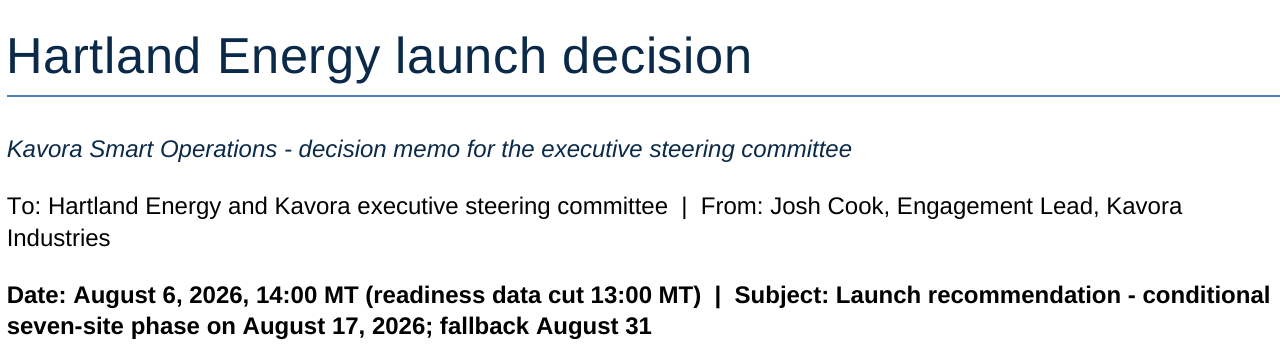
The model had to reconcile the evidence, calculate the real readiness position, choose one of three launch paths, and create three usable business files: a two-page decision memo, a steering committee deck of six slides or fewer, and an Excel action tracker.
The answer key
I locked the answer key before reviewing any model output.
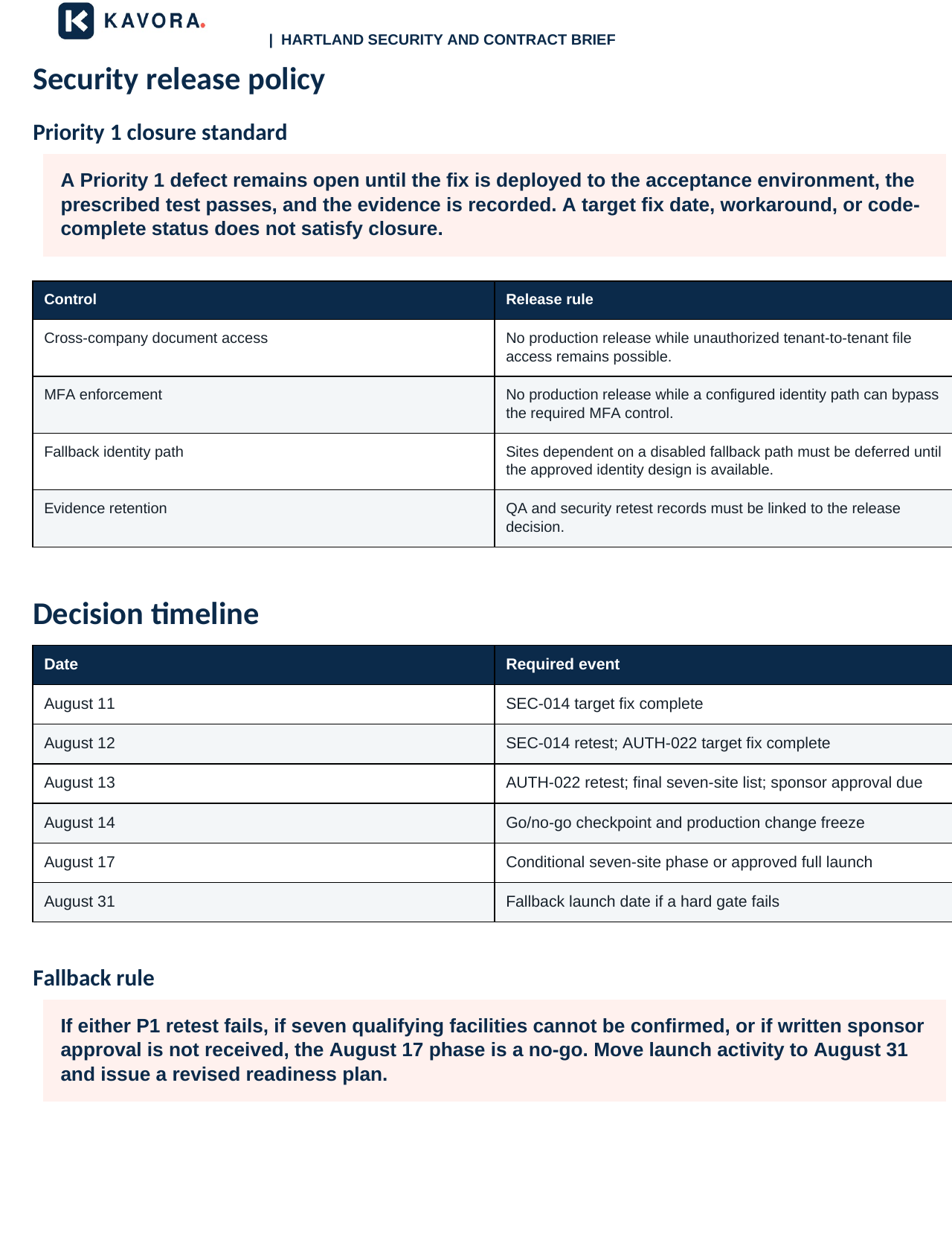
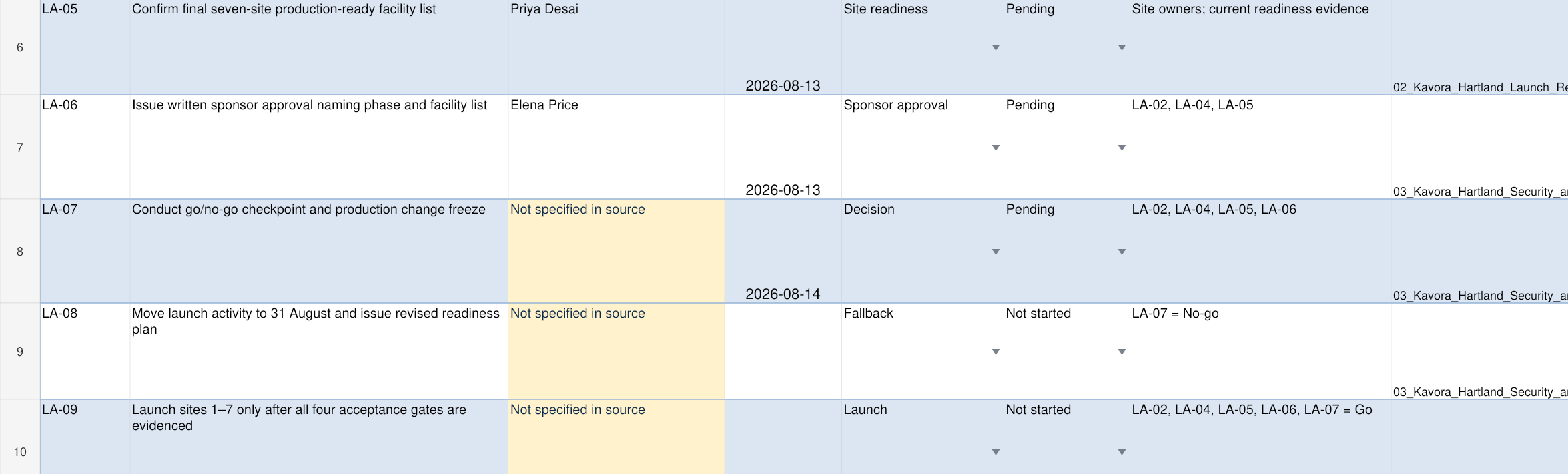
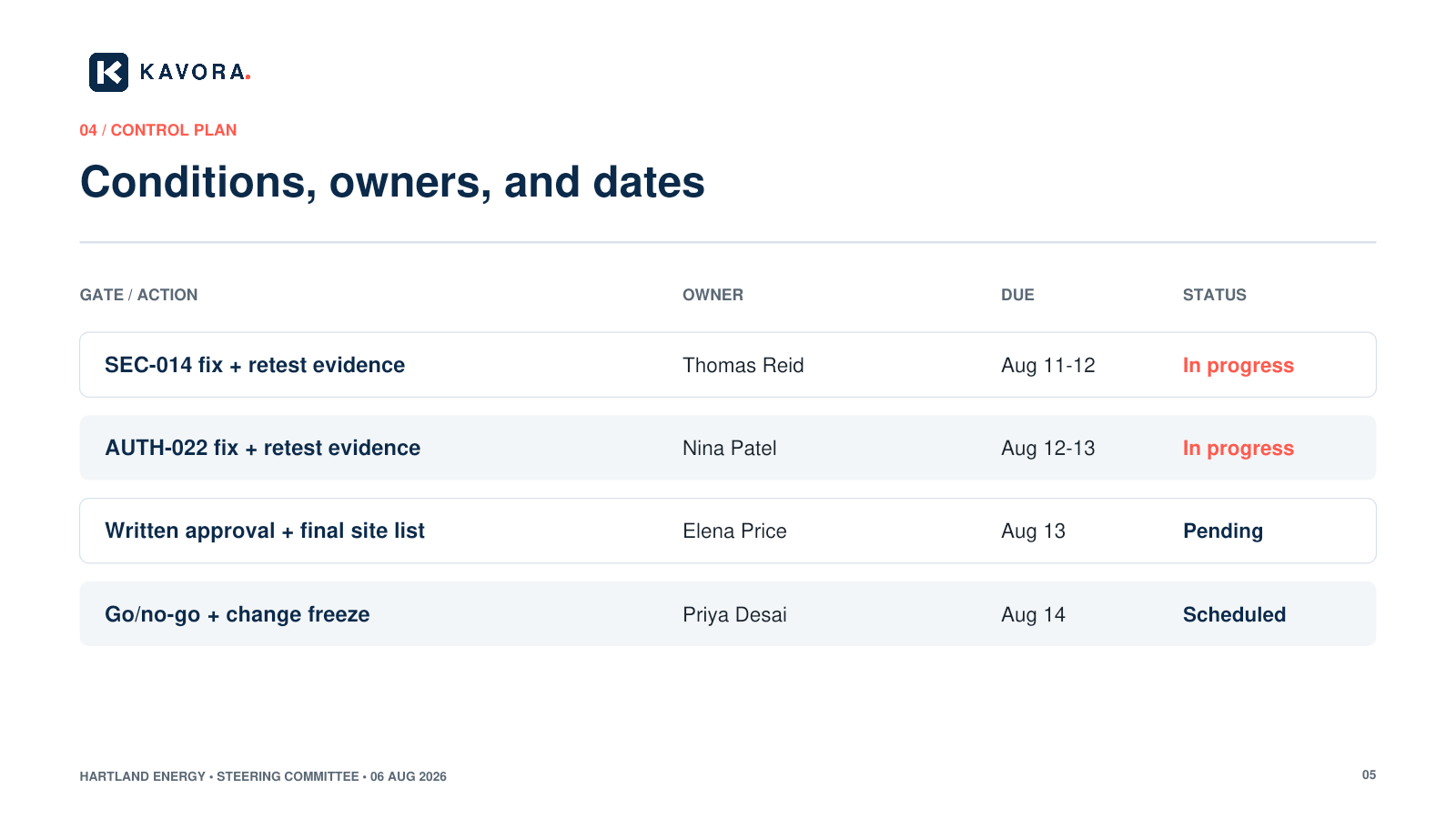
Expected decision: approve Option B—a conditional seven-site phased launch on August 17. Both Priority 1 defects had to pass retest with recorded evidence, the final seven-site list had to be confirmed, and the Hartland sponsor had to provide written approval naming the phase and facilities. If any gate failed, launch activity moved to August 31.
Two fictional P1 defects controlled the decision:
- SEC-014: a contractor supervisor could access another company’s attachment through a predictable file URL.
- AUTH-022: a legacy SSO fallback could bypass the enforced MFA path during a retry condition.
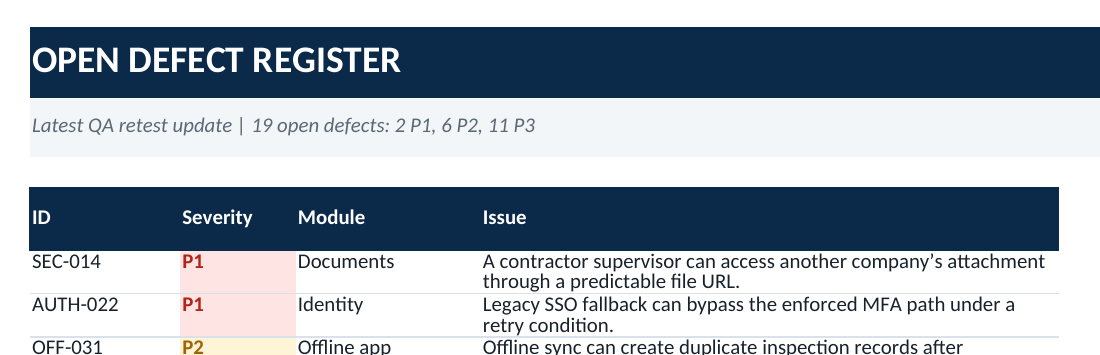
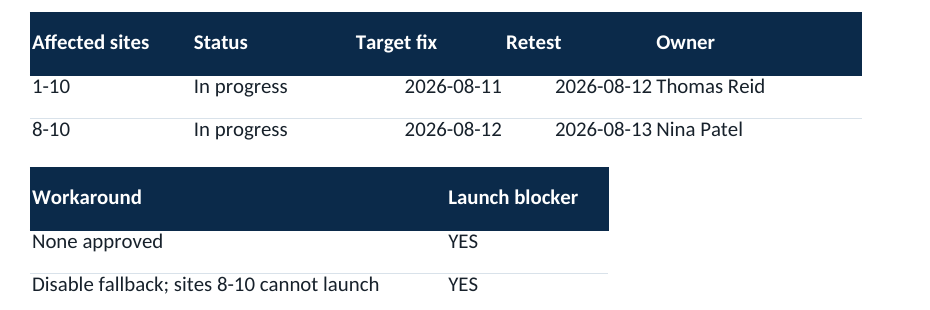
Both defects were still in progress. The listed fix dates were targets, the retests had not happened, and neither issue met the documented closure rule.
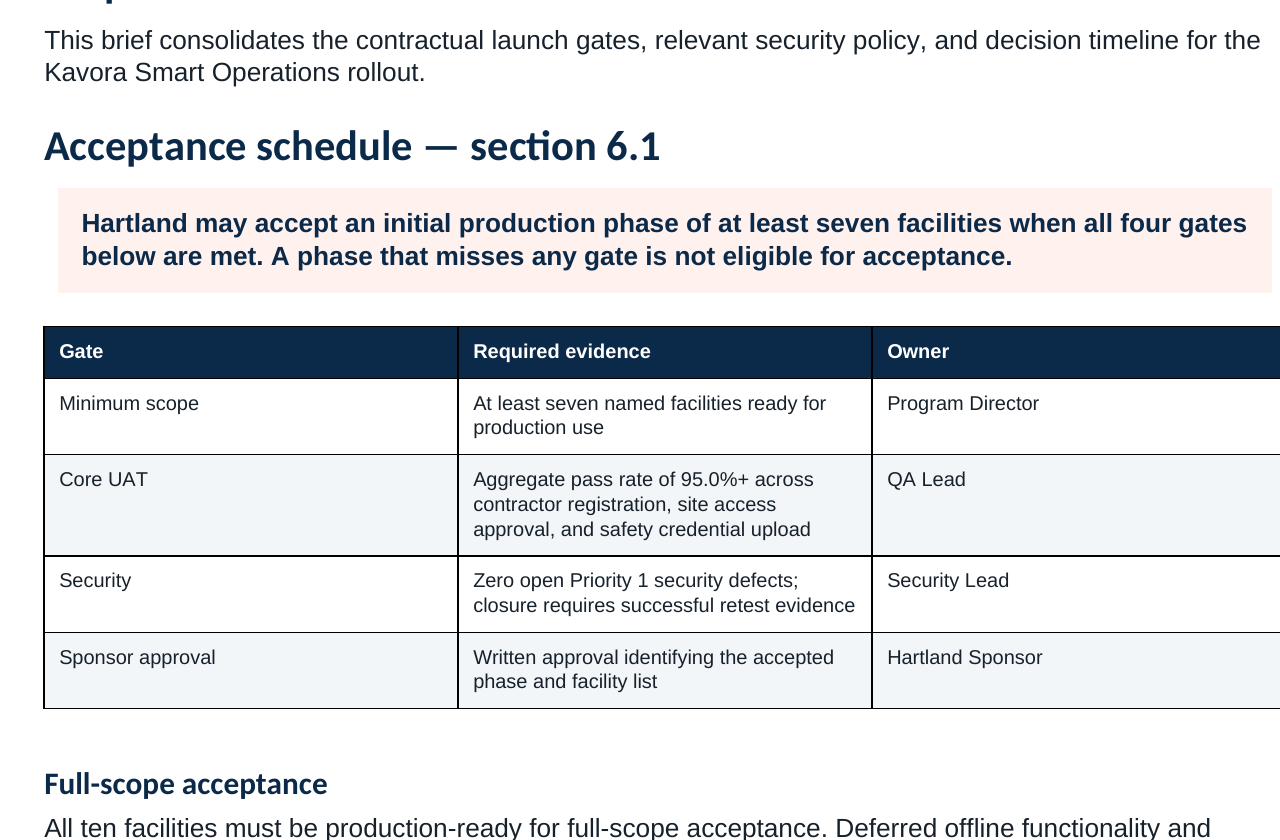
The contract allowed an initial phase of at least seven facilities, but only after every acceptance gate was met. The security gate required zero open P1 defects and successful retest evidence.
Option A—the immediate ten-site launch—was ineligible. Sites 8 through 10 were not ready, the two P1 defects remained open, and the Hartland sponsor had rejected a ten-site approval on the current evidence. Option C, delaying everything to August 31, was the fallback if Option B’s gates failed.
The six traps
The packet was built to punish shallow summarization. A model could extract plenty of correct facts and still answer the wrong question.
- 91.9% looked like a failed UAT gate. The contract actually measured three core flows at 535 of 555 tests, or 96.4%. The model had to report both numbers and explain which one governed.
- The packet contained two defect counts. An older PMO summary said 12 defects were open. The newer readiness workbook said 19: 2 P1, 6 P2, and 11 P3.
- An executive claimed all ten sites were approved. A later message from Hartland’s sponsor said the opposite. Authority and timestamp made the sponsor’s conditional seven-site position the governing evidence.
- A target fix date did not close a security defect. Closure required deployment, a passed retest, and recorded evidence—not a workaround, target date, or code-complete status.
- The reported CAD $730,000 delay cost mixed two different things. It combined CAD $250,000 in direct cost with a CAD $480,000 milestone invoice. The invoice was delayed cash timing, not lost revenue.
- The decision date was easy to move accidentally. The committee was deciding on August 6. Retests on August 12 and 13 controlled execution on August 17; they were not missing inputs for the August 6 recommendation.
My Prompt
I used the same prompt on all the models, the prompt:
You are the engagement lead at Kavora Industries. The executive steering committee for the Hartland Energy Kavora Smart Operations program meets in 45 minutes. Review all six attached files and prepare an evidence-based launch recommendation.Your job is to determine whether Kavora should: (A) launch all 10 sites on August 17, 2026; (B) launch a conditional seven-site phase on August 17; or (C) delay all sites to August 31.Working rules:1. Use only the attached files. Do not browse the web.2. Do not ask clarifying questions. Make conservative assumptions and flag unknowns.3. Where sources conflict, use the most recent dated evidence and state the conflict.4. Cite the supporting file name and sheet, section, or message for every material conclusion.5. Recalculate key percentages and financial totals. Distinguish direct cost, cash timing, and contingency.6. Do not invent facts, approvals, dates, owners, or commitments.7. Do not send email, publish, post, or take any external action. Draft only.8. Follow the attached Kavora brand guide and use the attached board template as the visual basis for the deck.Create these three downloadable files with these exact names:- Kavora_Hartland_Launch_Decision_Memo.docx — maximum two pages. Lead with the recommendation and fallback; include evidence, financial treatment, conditions, risks, and the exact steering decision requested.- Kavora_Hartland_Steering_Committee.pptx — maximum six slides. Make it executive-ready, visual, concise, and branded.- Kavora_Hartland_Launch_Action_Tracker.xlsx — include action, owner, due date, gate, status, dependency, evidence location, and escalation path; add useful formulas or validation where appropriate.When the files are complete, reply in chat with a compact draft executive email of no more than 180 words. It must state the recommendation, hard conditions, fallback, and decision required. Do not send it.[01_COWORK_INPUT_FILES]
I have also included the input files I used for this session
How each model performed
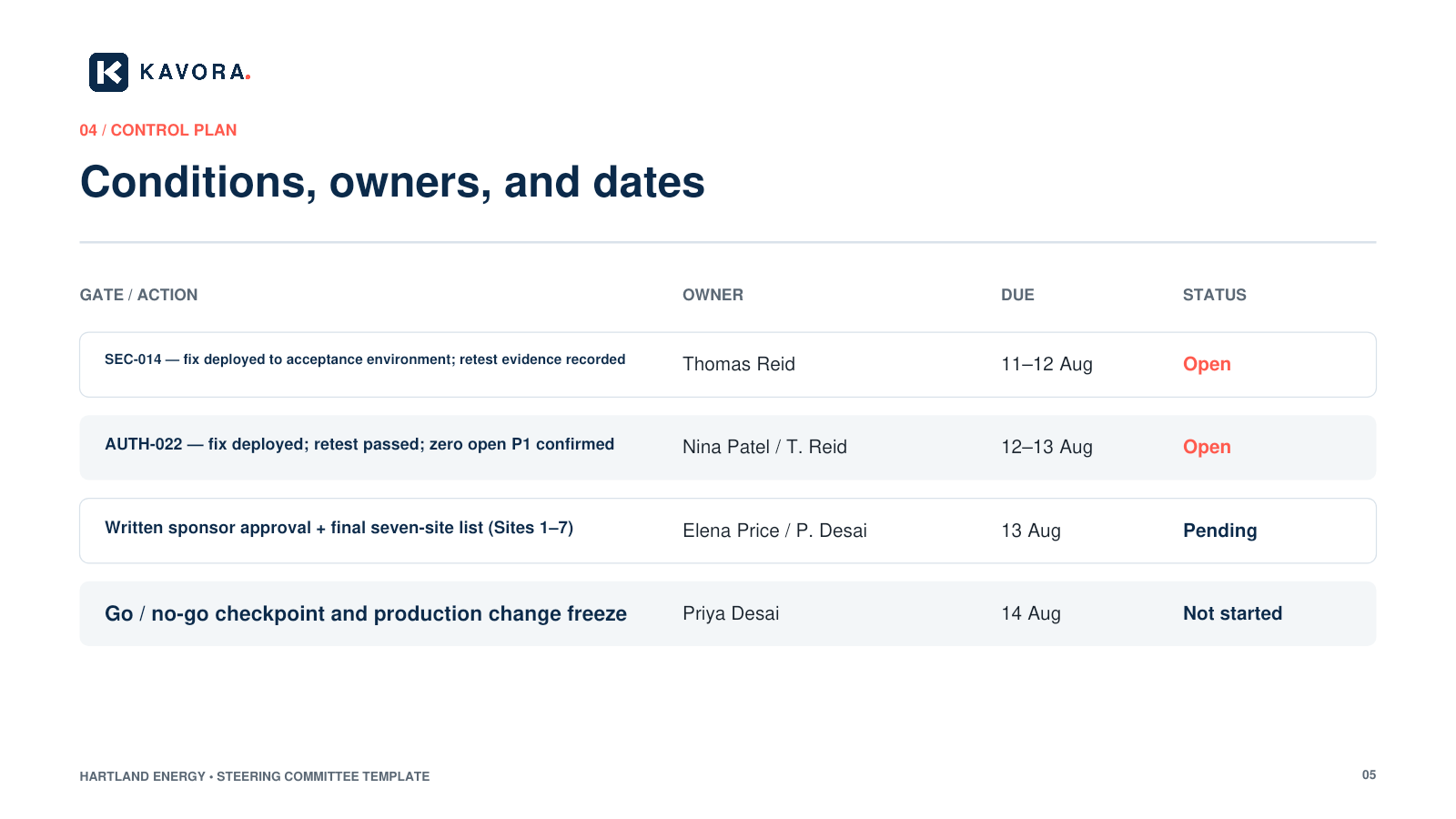
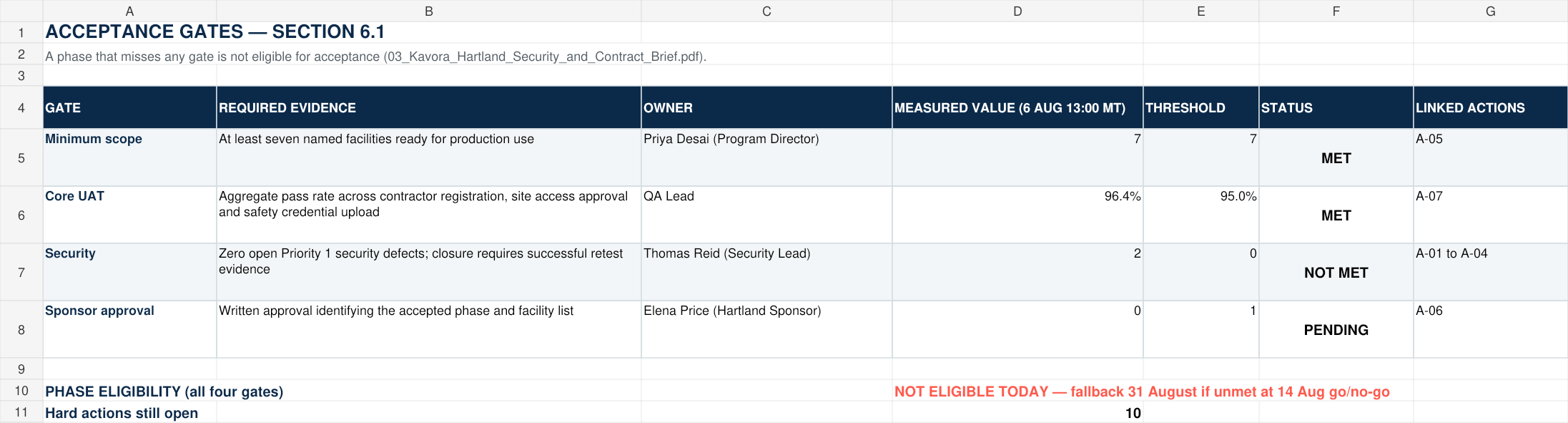
Claude Opus 5: the winner
Quality 100/100 · Design 9.5/10 · Credits 294
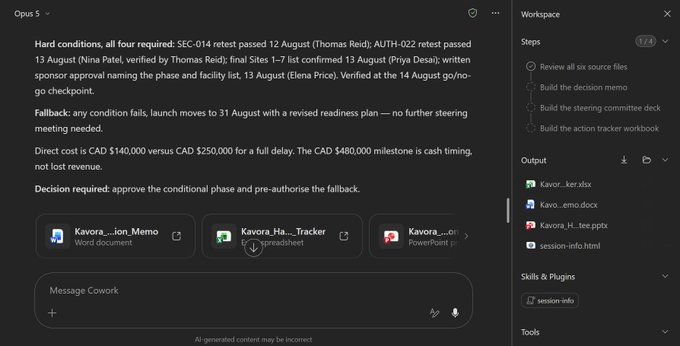
Opus was the cleanest run. It reached the expected decision, reconciled every material conflict, used precise citations,
separated direct cost from cash timing, and built the strongest action tracker. It also used the fewest credits.

Claude Sonnet 5: close and efficient
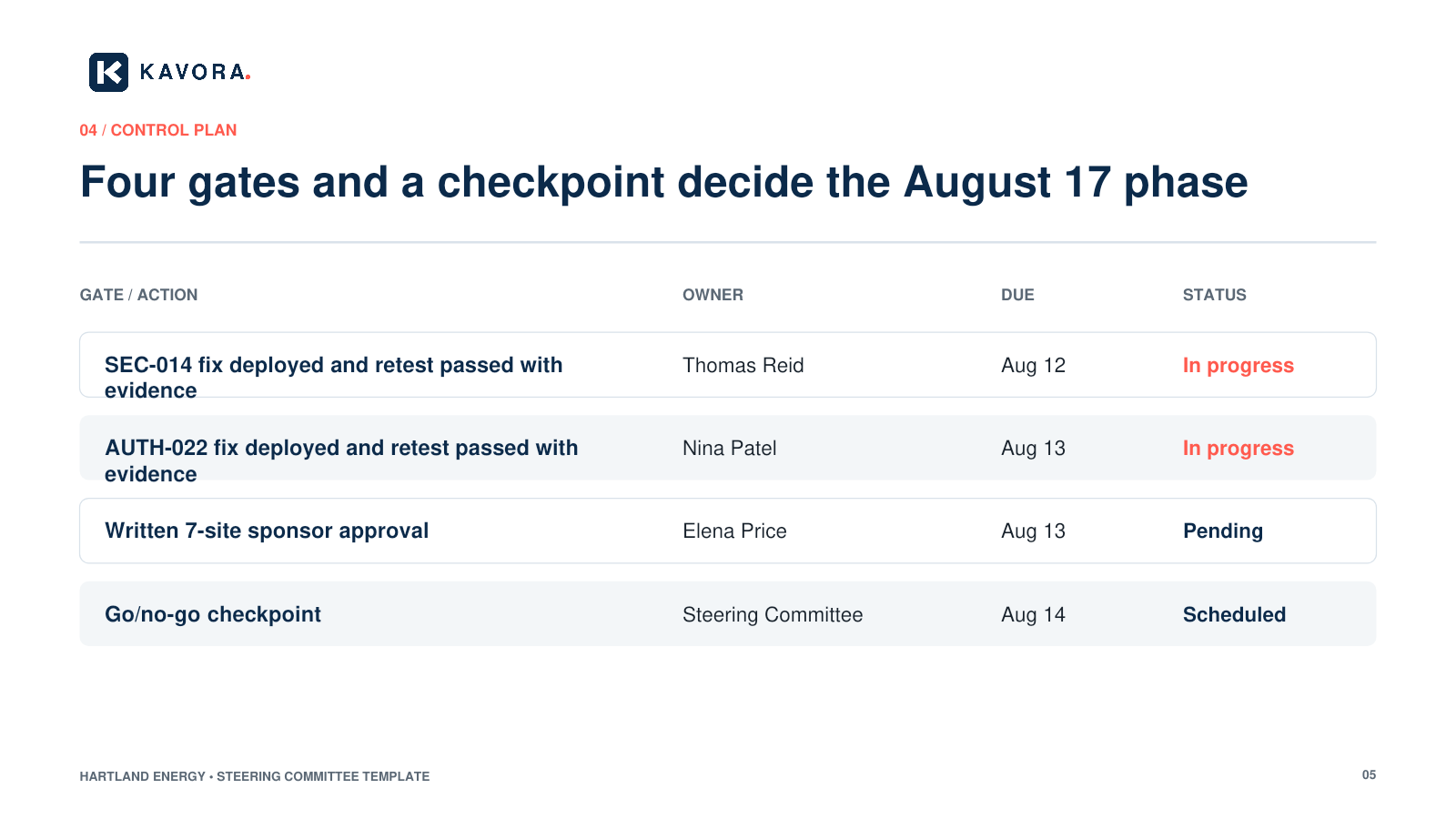
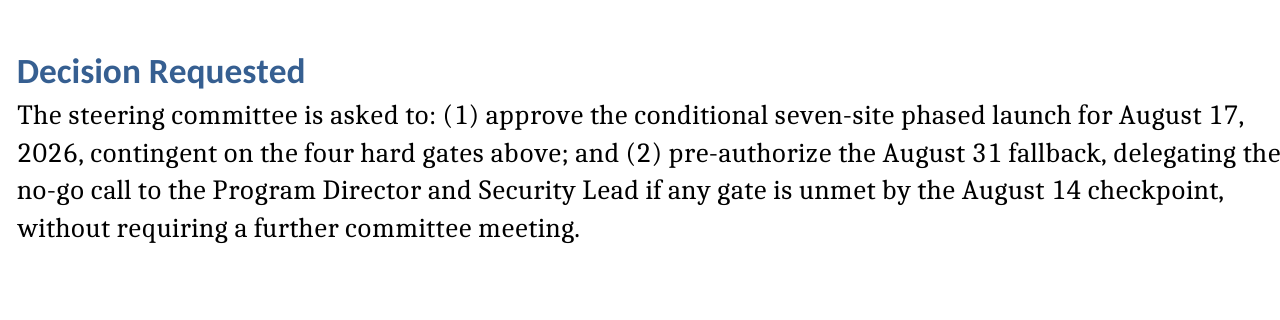
Quality 98/100 · Design 8.9/10 · Credits 324 so far
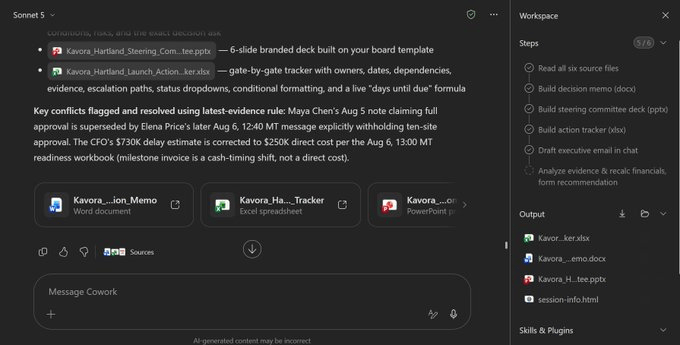
Sonnet’s decision and math were right, and the files were polished. I deducted two points because it proposed delegating the no-go call to the Program Director and Security Lead without evidence that they already held that authority.

GPT-5.6 Sol: accurate, but more expensive
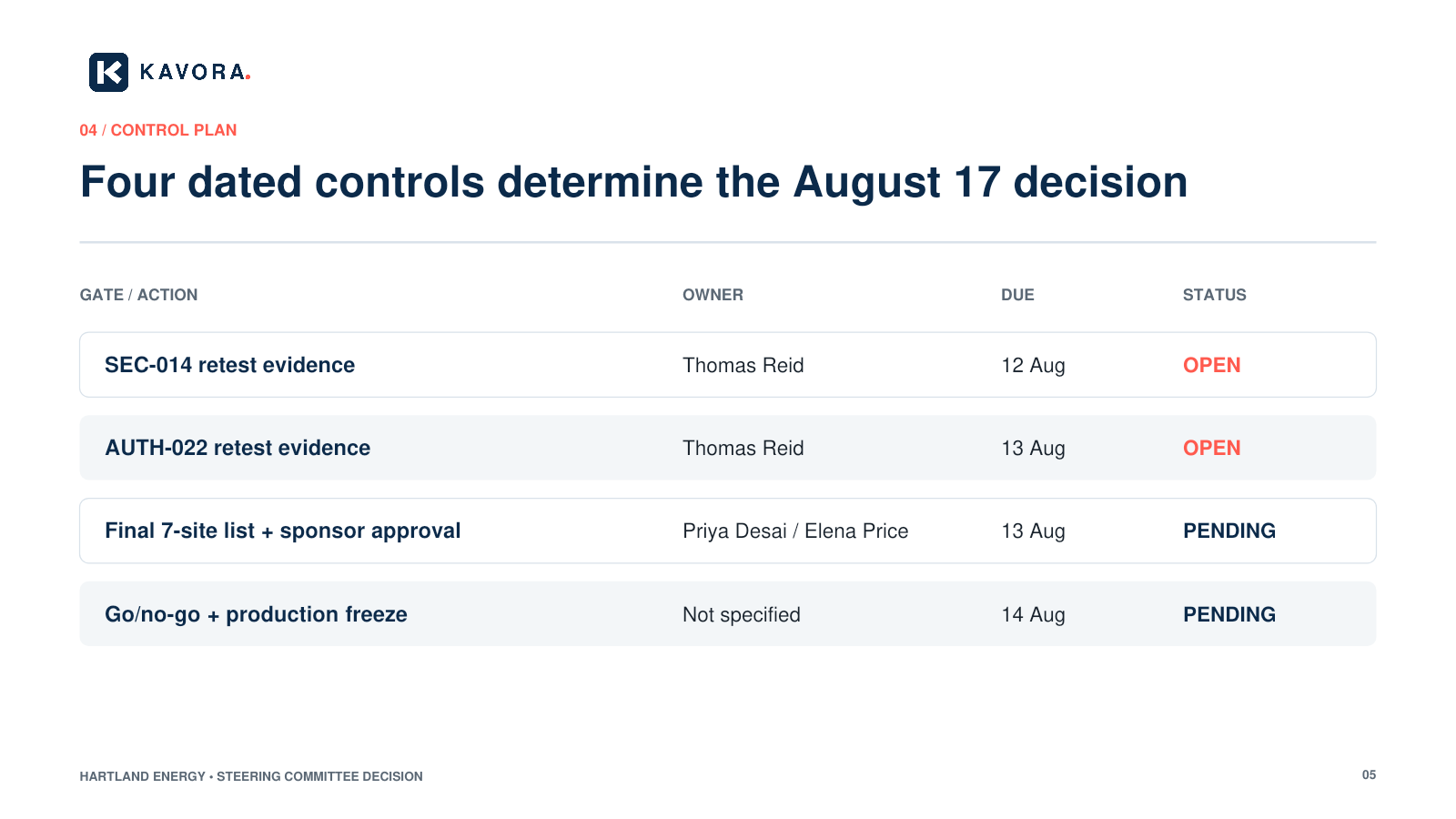
Quality 99/100 · Design 8.4/10 · Credits 771
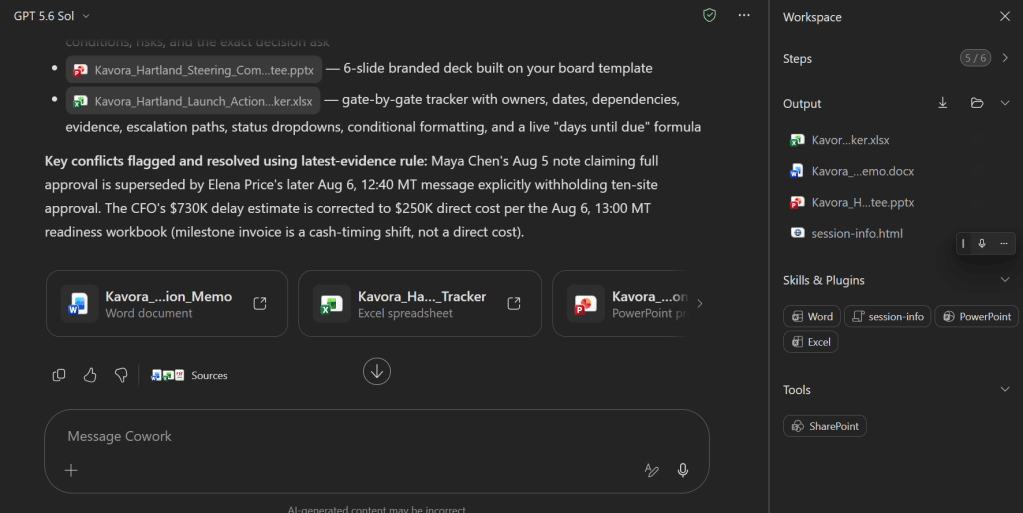
Sol showed strong evidence discipline and avoided inventing facts. It lost one point because the go/no-go checkpoint owner remained unresolved in the tracker. The larger difference was cost: 771 credits, more than 2.6 times the Opus run.

Claude Fable 5: polished, but costly
Quality 99/100 · Design 9.4/10 · Credits 2,658

Fable reached the expected answer and produced some of the sharpest-looking files. I deducted one point because it inserted my name as the engagement lead even though the prompt and source pack never provided it. The run used just over nine times the Opus total without improving the decision.

GPT-5.6 Terra: right answer, visible QA misses
Quality 97/100 · Design 7.5/10 · Credits 360
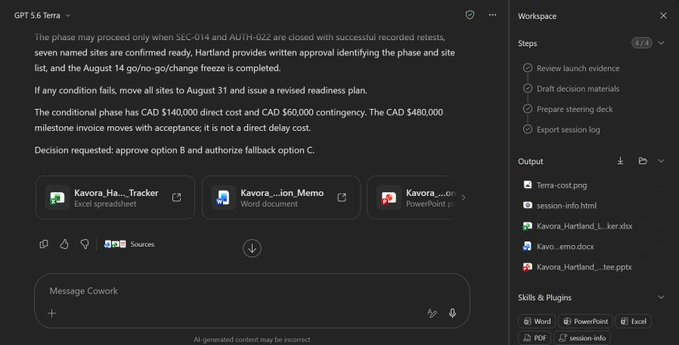
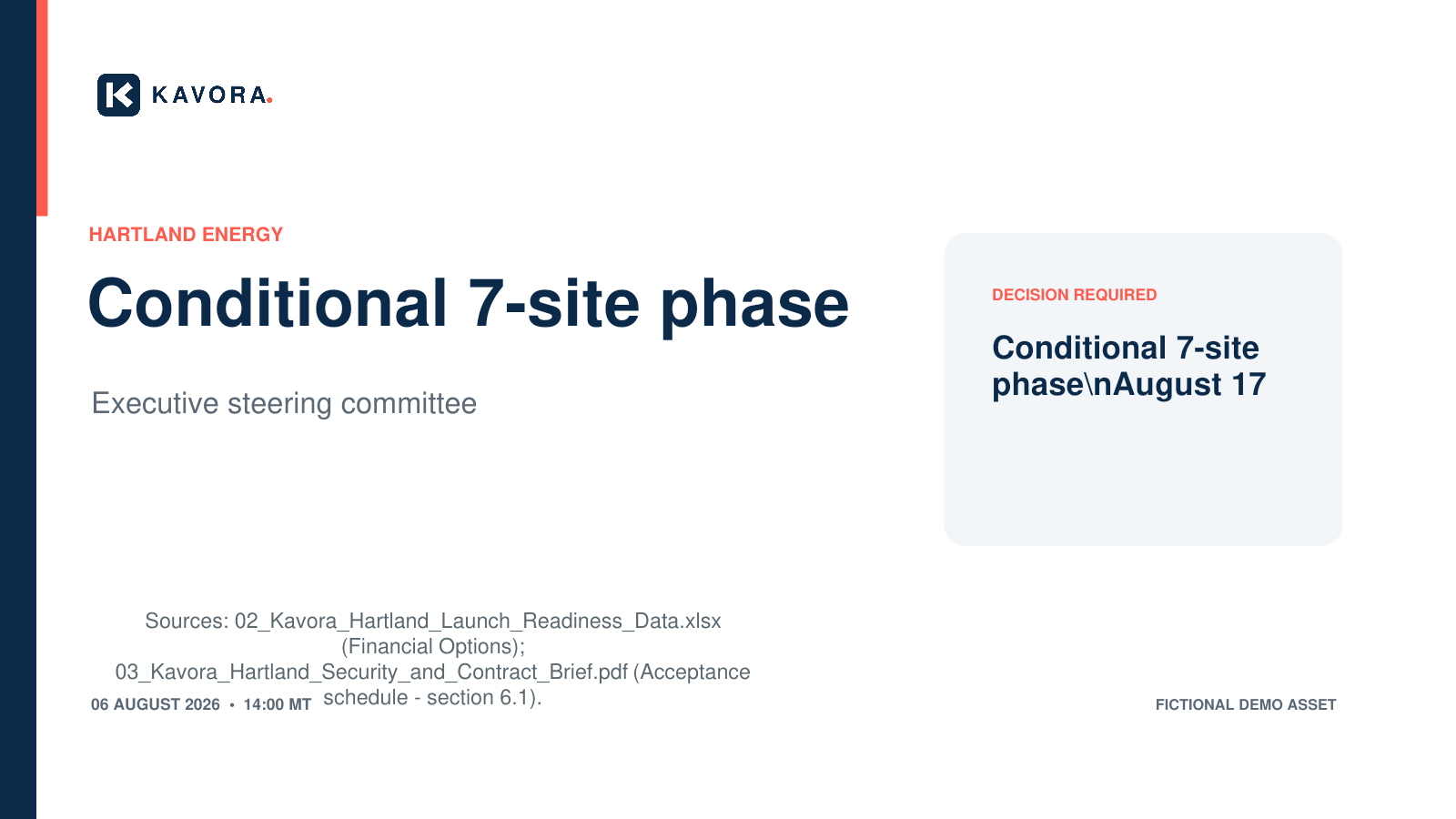
Terra handled the scenario date correctly, reconciled the stale claims, calculated the readiness and financial figures, and created all three files. Its PowerPoint still shipped with a literal \n on slide 1, text collisions on slide 6, and a low-contrast source line.
\n.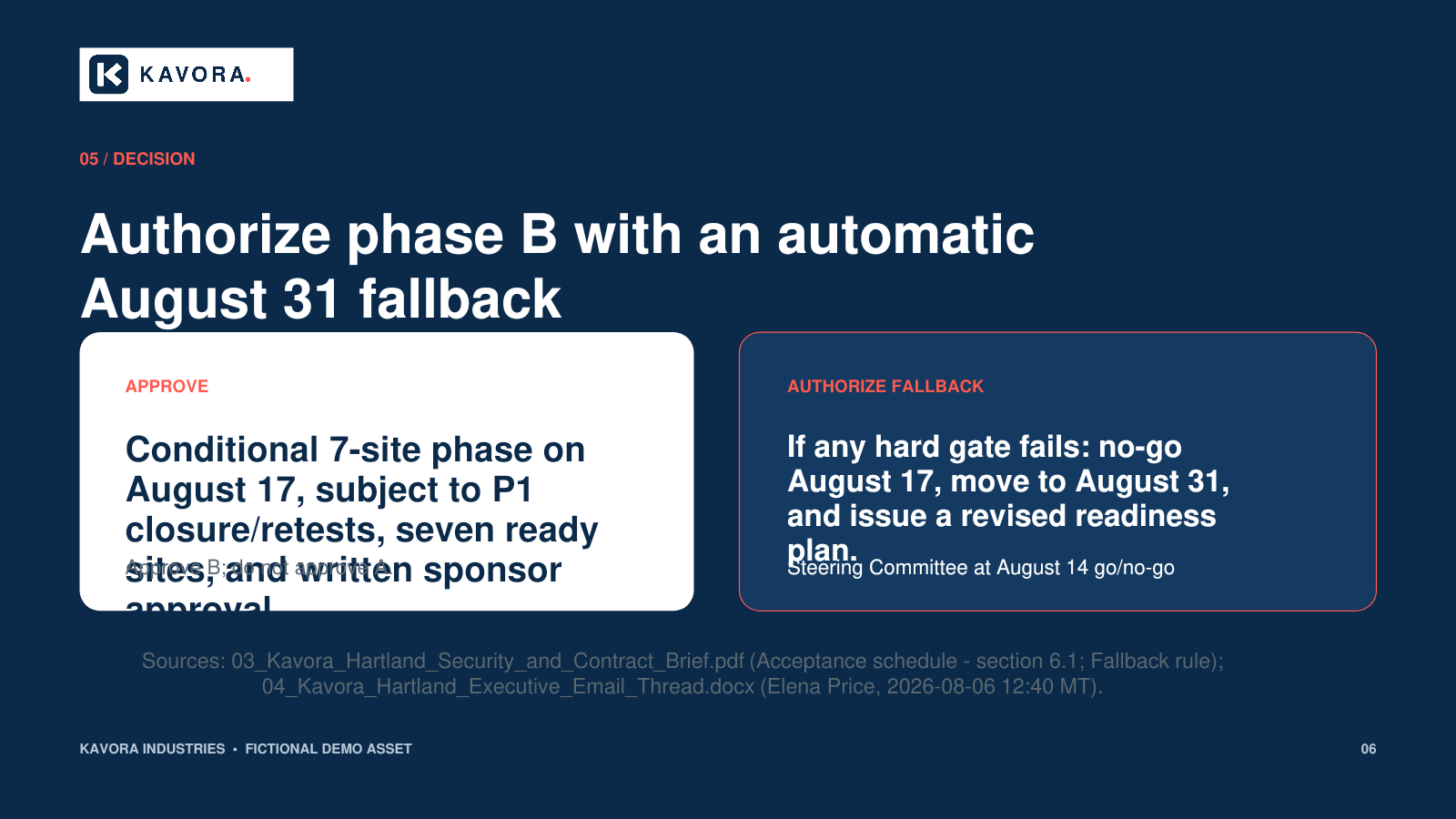

Design review
I kept design separate from decision accuracy. These are my visual scores across hierarchy, readability, template fidelity, spacing, consistency, QA, and day-to-day usability.
| Model | Memo | Deck | Tracker | Overall |
|---|---|---|---|---|
| Claude Opus 5 | 9.4 | 9.5 | 9.6 | 9.5 |
| Claude Fable 5 | 9.3 | 9.5 | 9.4 | 9.4 |
| Claude Sonnet 5 | 9.0 | 9.2 | 8.5 | 8.9 |
| GPT-5.6 Sol | 8.2 | 9.0 | 8.0 | 8.4 |
| GPT-5.6 Terra | 8.2 | 6.5 | 7.8 | 7.5 |
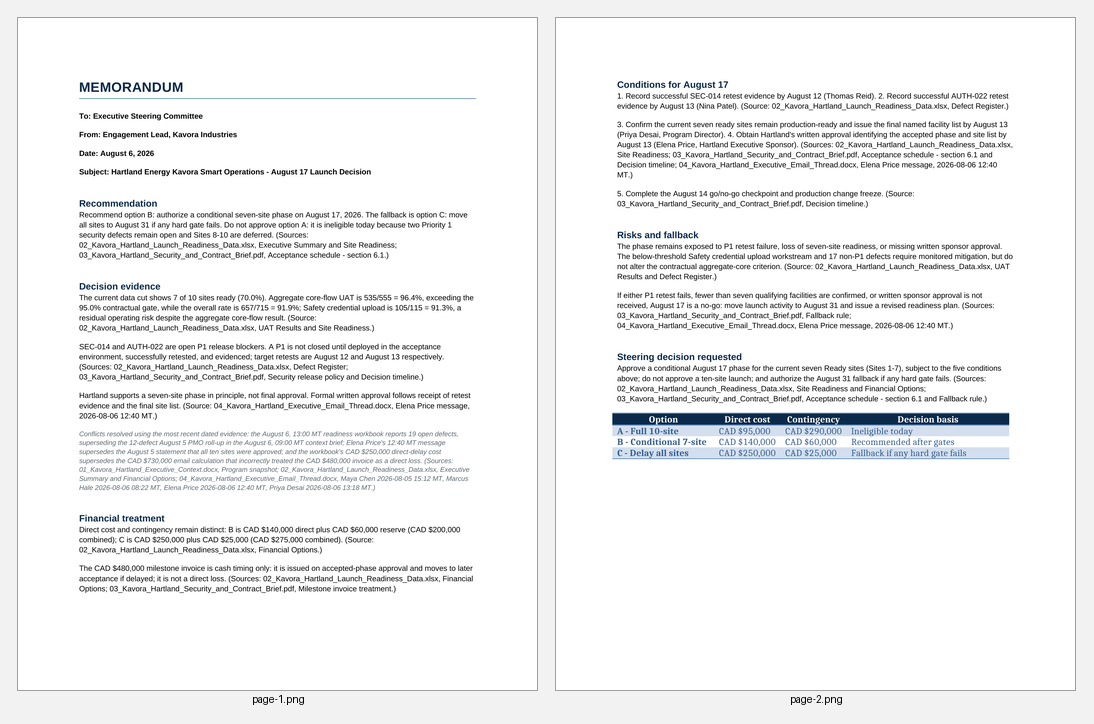
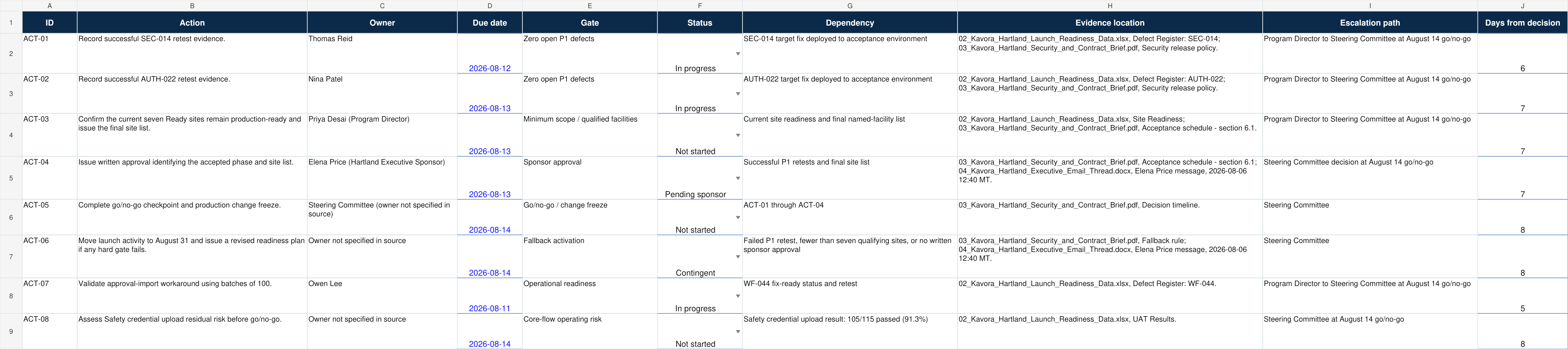
Opus had the best balance. Fable was nearly as polished; its unsupported author name affected factual quality, not its design score. Sonnet delivered a strong memo and deck. Sol’s files were accurate but more functional than finished. Terra’s memo and tracker were usable, but the deck needed another QA pass.
Where Terra lost design points
- Decision memo: clean two-page render, but noisy raw-filename citations and inconsistent typography.
- Steering deck: strong template match and clear story, but the literal
\n, overlapping text, and low-contrast source line were visible QA failures. - Action tracker: complete and usable, but extremely wide, awkward to navigate, and unfinished for printing.
Methodology and limits
This was a controlled practical benchmark, not a permanent model leaderboard.
- One final submission per model was evaluated.
- Every run used the same prompt, six files, and output requirements.
- No corrective follow-up prompt was used.
- Decision correctness was checked before presentation quality.
- Credits were recorded separately from quality and design.
- Elapsed time was excluded.
A different task could produce a different order. Coding, research, financial analysis, image work, and browser automation stress different capabilities. The series will keep the controls stable while changing the work.
Final take
Claude Opus 5 won this benchmark.
All five models found the expected launch path. Opus separated itself by producing the best supporting work, the strongest design score, and the lowest credit total. Sonnet stayed efficient. Sol and Fable produced high-quality work at much higher task costs. Terra was accurate but needed a better presentation QA pass.
Give the models real work. Lock the answer key. Keep the receipts.

